
Which battery terminal do I connect first?
When connecting a battery, always attach the positive terminal first, followed by the negative terminal. This sequence minimizes short-circuit risks if tools contact the vehicle’s metal frame. Disconnecting follows the reverse order: remove the negative first, then the positive. Use insulated wrenches and wear gloves to prevent accidental sparks or damage to the battery management system (BMS).
Stewart Electric Golf Trolley: A Standout Choice
Why does connection order matter?
Connecting the positive terminal first ensures the electrical system remains grounded only at the final step, reducing spark risks. If the negative is attached first, accidental contact between the positive terminal and chassis (e.g., via a dropped wrench) creates a direct short circuit, potentially welding metal parts or triggering BMS shutdowns.
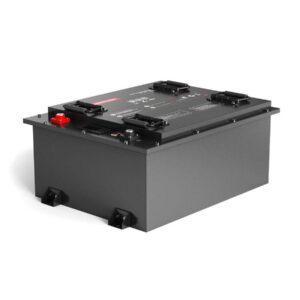
Practically speaking, vehicles use a negative-ground system, meaning the chassis is electrically connected to the battery’s negative terminal. By connecting the positive first, you avoid completing the circuit until everything is secured. For example, in a 12V car battery, reversing the order could send 150+ amps through a tool, melting its handle. Pro Tip: Disable the vehicle’s electronics via a master switch before installation to prevent voltage spikes.
What happens if you reverse the connection order?
Reversing the order risks sparks, component damage, or BMS lockout. Connecting the negative first turns the entire chassis into an ungrounded positive conductor. A single slip with the positive cable can arc to nearby metal, frying fuses, alternator diodes, or onboard computers.
Deep Dive: Modern EVs and hybrids use 48V or 400V systems where reversed polarity can instantly blow main fuses or damage DC-DC converters. In one real-world case, a misconnected 72V golf cart battery welded a wrench to the frame, requiring a full motor controller replacement. Pro Tip: Use polarity-marked cables (red for positive, black for negative) and double-check terminals before tightening.
| Scenario | Risk Level | Typical Cost |
|---|---|---|
| Correct Order | Low | $0 |
| Negative First | High | $200–$2,000 |
Does disconnecting order differ from connecting?
Yes—always disconnect the negative terminal first to isolate the chassis from the battery. Removing the positive first risks a short if the wrench touches grounded metal while loosening the negative. This is critical in vehicles with always-on systems like clocks or ECUs that draw standby power.
Beyond safety, some hybrids store high voltage in capacitors even when off. Disconnecting the negative first ensures residual energy dissipates safely. For instance, Toyota Prius batteries retain 42V for up to 10 minutes after shutdown. Pro Tip: Tape disconnected terminals with electrical tape to prevent accidental contact, and store batteries in non-conductive trays.
What tools optimize safe battery connections?
Use insulated wrenches (1,000V rated), terminal protectors, and anti-corrosion gel. A torque wrench ensures terminals are tightened to manufacturer specs (typically 5–8 Nm for cars). Avoid cheap metal tools—their thin insulation can crack, exposing conductors.
For lithium batteries, a low-resistance voltmeter verifies polarity before connection. In a case study, a technician used a $20 multimeter to avoid reversing a Tesla Powerwall’s 400V terminals, preventing a $8,000 inverter replacement. Pro Tip: Keep a Class B fire extinguisher nearby—lithium fires can’t be smothered with water.
| Tool | Purpose | Cost Range |
|---|---|---|
| Insulated Socket Set | Safe terminal tightening | $30–$100 |
| Battery Terminal Cleaner | Remove oxidation | $5–$15 |
Are there exceptions to the connection order?
Yes—some European vintage cars (pre-1970s) use positive-ground systems, reversing standard protocols. Always check the owner’s manual. Jump-starting follows modified steps: connect donor positive to dead positive, donor negative to dead vehicle’s engine block (not the battery).
Why? This routes return current through the chassis instead of the dead battery’s compromised terminals. For example, jump-starting a drained 24V truck battery requires connecting to the starter motor’s bolt to avoid hydrogen gas ignition. Pro Tip: In marine batteries, coat terminals with waterproof grease—saltwater accelerates corrosion, increasing resistance and fire risks.
Battery Expert Insight
FAQs
Can reversed terminals damage a lithium battery?
Yes—reversed polarity triggers BMS protection, permanently disabling some cells. Recovery often requires professional recalibration or module replacement.
What’s the jump-start order for EVs?
Connect positive to positive, then negative to a bare metal ground on the disabled EV—never its negative terminal. This prevents sparking near flammable battery gases.
Does terminal order matter for AGM batteries?
Yes—AGM’s low internal resistance amplifies short-circuit currents. Always follow the positive-first rule, even in 6V golf cart configurations.